 Hanno, Ibrahim, et al. Pharmaceutical research 29.2 (2012): 559-573.
Butyl methoxydibenzoylmethane (UV Absorber 1789, or Parsol 1789) is an effective UVA filter but is prone to photodegradation and - when used in small molecules form - may penetrate the skin. The study aimed to develop a carrier system that (1) protects UV Absorber 1789 from UV-induced breakdown, (2) controls its release, and (3) limits its penetration through the epidermis, while maintaining sunscreen activity.
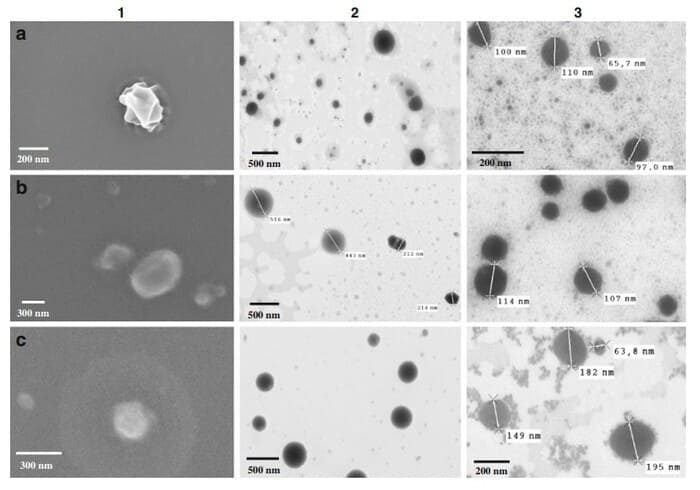
Formulation & Process: Polyamide NCs were prepared by combining spontaneous emulsification and interfacial polycondensation (sebacoyl chloride + diethylenetriamine). Nano-emulsions (NE) made by the same emulsification process but without monomers served as controls. The concept: trap UV Absorber 1789 in an oil core, surround it with a thin polyamide shell, and thereby modulate release, skin uptake and photostability.
Key Results: The process successfully yielded nanocapsules with high encapsulation yields (>98%) for the active ingredient. Compared to its formulation in a standard nano-emulsion, the nanocapsule system provided a controlled release profile, reducing the release rate by up to 60%. This technology also effectively minimized the penetration of UV Absorber 1789 through the epidermal layer. The polyamide shell protected encapsulated sunscreen filters from photo-degradation under UV exposure, while the sunscreen activity was not adversely affected by encapsulation.


 Nesseem, D. International journal of cosmetic science 33.1 (2011): 70-79.