 Liao, Kaili, et al. Journal of Petroleum Science and Engineering 213 (2022): 110372.
This case study explores the role of disodium cocoamphodiacetate (CAD), an amphoteric surfactant, in improving the dispersion stability and oil recovery performance of graphene oxide (GO) nanofluids. The study focuses on the potential application of CAD-enhanced nanofluids as effective agents for enhanced oil recovery (EOR).
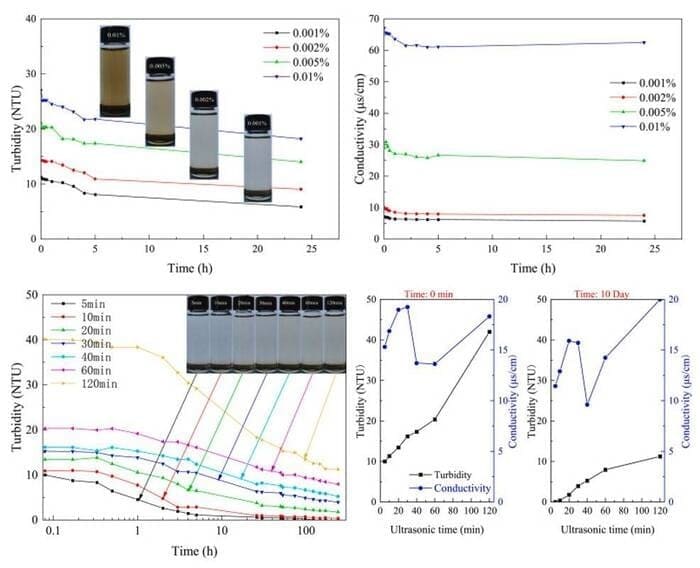
Methods: A water-based graphene oxide nanofluid was formulated, and its stability and dispersibility were systematically evaluated under various conditions. Turbidity and conductivity measurements were used to assess the effects of ultrasonic dispersion time, GO concentration, and type of surfactant. The interfacial tension, emulsification capability, and displacement efficiency of the CAD/GO dispersion were further examined through micromodel and core flooding tests.
Key Results:
· The amphoteric surfactant CAD was identified as a highly suitable dispersing agent for GO. CAD significantly improved the dispersion stability of GO in aqueous solution.
· The CAD/GO dispersion reduced oil/water interfacial tension to as low as 10-2 mN/m.
· The dispersion demonstrated excellent emulsifying properties and long-term emulsion stability.
· In core flooding tests, the CAD/GO nanofluid achieved an oil recovery rate of 11.8%, substantially higher than the 6.7% obtained using CAD aqueous solution alone.
· The improved performance is attributed to the enhanced interfacial activity and emulsification capacity provided by CAD.


 Deyab, M. A. Journal of Molecular Liquids 271 (2018): 240-245.