 Cao, Bei, et al. Metabolomics 9.5 (2013): 960-973.
A metabolomics-based strategy was applied to evaluate the pharmacodynamics and resistance mechanisms of adriamycin in breast cancer, comparing drug-sensitive MCF-7S and drug-resistant MCF-7Adr cell lines to identify metabolic shifts associated with chemoresistance.
Experimental Protocol: MCF-7S and MCF-7Adr cells were treated with adriamycin at 1 uM and 5 uM, respectively, for 6, 12, 18, 24, and 36 h (n = 6 per time point). Intracellular metabolites and culture media metabolites were profiled using GC/TOF-MS after methoximation and trimethylsilylation derivatization. PCA and PLS-DA multivariate analyses were applied to identify discriminatory metabolites. ROS levels were measured via DCFH-DA fluorescence, and P-gp expression was assessed by Western blot and RT-qPCR.
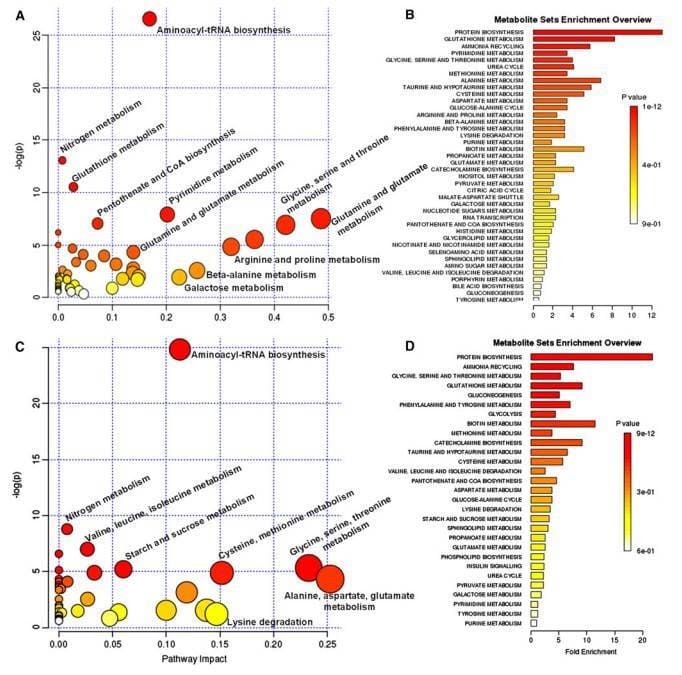
Performance Evaluation: PCA revealed that adriamycin markedly perturbed the metabolic pattern of MCF-7S cells while having minimal effect on MCF-7Adr cells, and the treated sensitive cells shifted metabolically toward the resistant phenotype. Adriamycin depressed protein, purine, pyrimidine, and glutathione biosynthesis while up-regulating glycerol metabolism in MCF-7S cells. Key discriminatory metabolites included valine, isoleucine, proline, glycine, serine, lactic acid, citric acid, and beta-alanine. Elevated glycerol metabolism and reduced glutathione synthesis indicated enhanced ROS generation with weakened antioxidant defense. Adriamycin increased ROS and up-regulated P-gp expression, effects reversed by N-acetylcysteine treatment, confirming oxidative stress involvement in resistance.


 Savatier, Julien, et al. Leukemia research 36.6 (2012): 791-798.